
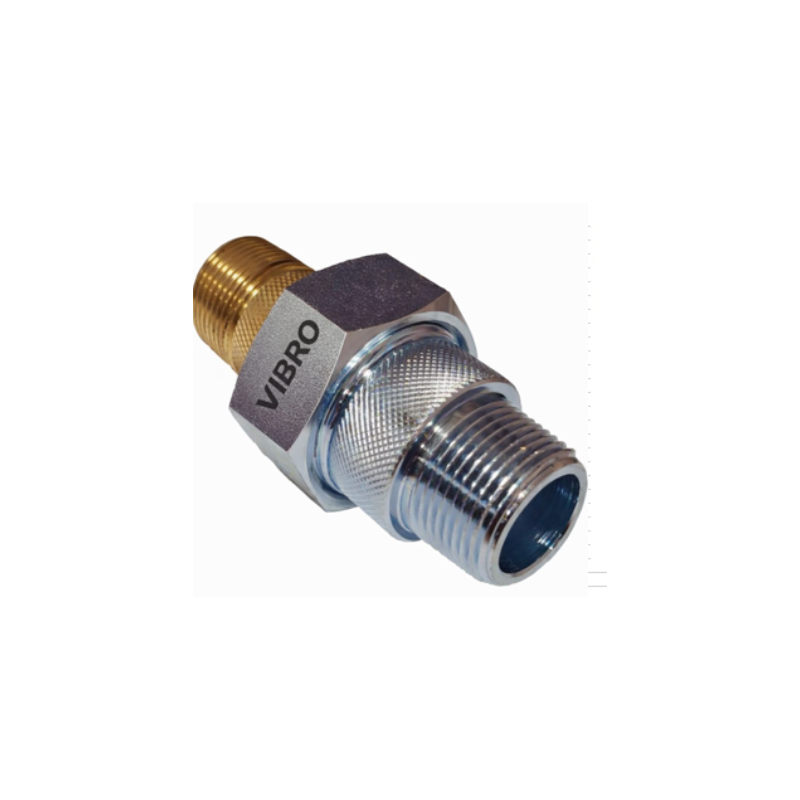
VIBRO Dielectric Unions (Male Steel- Male Brass)
VIBRO Dielectric Unions are engineered to isolate dissimilar metals within piping systems, preventing electrolytic corrosion caused by stray electrical currents and galvanic interaction. These unions incorporate an insulating barrier that interrupts the electrical path between metals such as steel and copper, ensuring long‑term system reliability and compliance with corrosion‑protection standards.
Key Specifications
These unions incorporate an insulating barrier that interrupts the electrical path between metals such as steel and copper, ensuring long‑term system reliability and compliance with corrosion‑protection standards.
Product Details
Standard Configuration
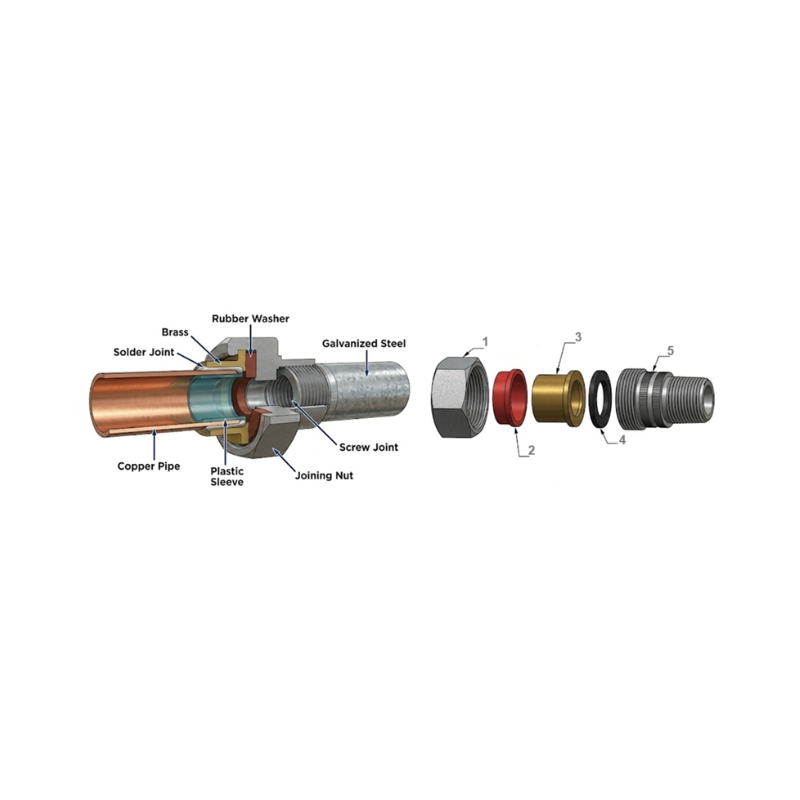
- Body: Alloy steel, zinc‑galvanised
- Tailpiece: Brass
- Insulating Insert: Nylon
- Gaskets: NBR
Optional Materials
- Body: Hot‑dip galvanised steel, Stainless Steel 304, Stainless Steel 316, Malleable Iron
- Tailpiece: DZR brass or copper
- Insulating Insert: PTFE (Teflon)
- Gaskets: EPDM (standard), Viton (high‑temperature applications)
- Working Pressure:
- Standard: 250 PSI
- Optional: 300 PSI (ANSI 16.39)
- Flanged Versions:
- 250 PSI standard
- 300 PSI available (ANSI B16.42 or B16.24)
- Thread Standards:
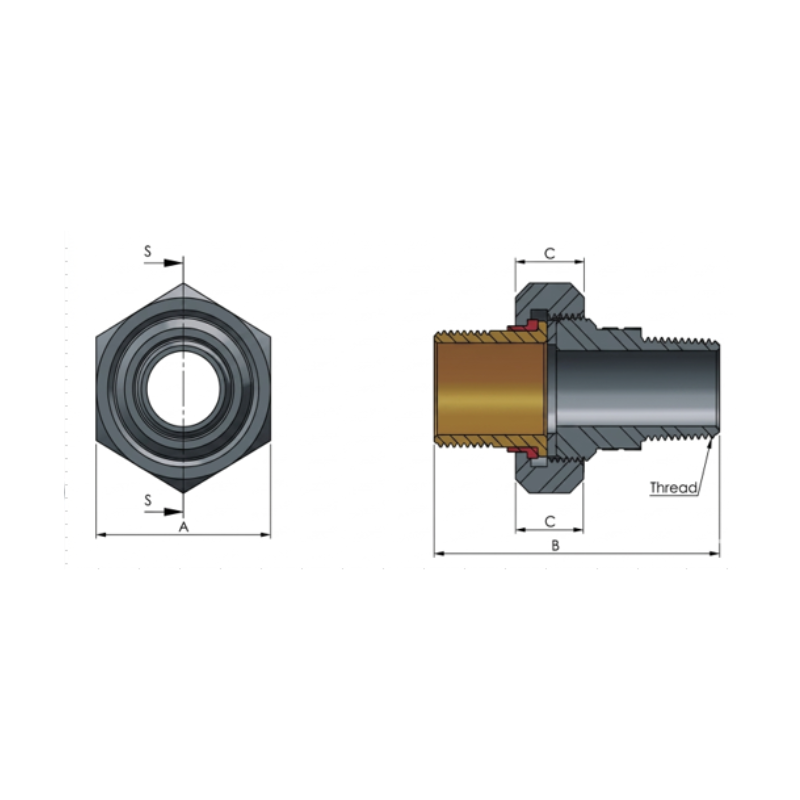
- NPT/BSP per ASME B1.20.1
- G‑threads per ISO 228‑1
- Temperature Range:
- –20°C to +82°C
- Maximum water temperature: 180°F
- Connection Types:
- Threaded, welded, solder/sweat, or mixed transitions
- Custom transitions between different pipe sizes available
- NPT threading available on request
- Electrically insulated joint prevents galvanic coupling between dissimilar metals.
- Removable union design allows easy installation, maintenance, and system modification.
- Insulating components prevent stray‑current grounding through the piping network.
- Suitable for copper‑to‑steel transitions and other mixed‑metal installations.
- Available in multiple end‑connection combinations, including:
- Female steel × brass solder
- Female steel × female brass
- Female steel × male brass
- Male steel × brass solder
- Male steel × male brass
Principle of Operation
Electrolytic corrosion occurs when two dissimilar metals are in contact within a conductive fluid, forming a galvanic cell. Copper, commonly present in heating and cooling systems, dissolves easily and releases ions that accelerate corrosion in adjacent metals. The dielectric union interrupts this electrical circuit by incorporating a non‑conductive insulating barrier, preventing ion transfer and eliminating the galvanic reaction.
VIBRO Dielectric Unions are suitable for:
- Heating systems
- Air‑conditioning systems
- Hot water storage tanks
- Chilled‑water circuits
- Fan Coil Units (FCUs) and Air Handling Units (AHUs)
- Sanitary hot‑water circuits
- Water, mineral oil, and vegetable oil circuits
- Natural gas and propane installations
To specify a VIBRO Dielectric Union or Dielectric Flange, provide:
- Product type: Dielectric Union or Dielectric Flange
- Model / Size: Nominal pipe size and connection type
- Thread type: NPT, BSP, or G‑thread
- Material selection: Body, tailpiece, gasket, and insulation options
- Coating requirement: Zinc‑galvanised, hot‑dip galvanised, stainless steel, etc.
Custom configurations and mixed‑size transitions are available upon request.