
Vibro - Dismantling Joints
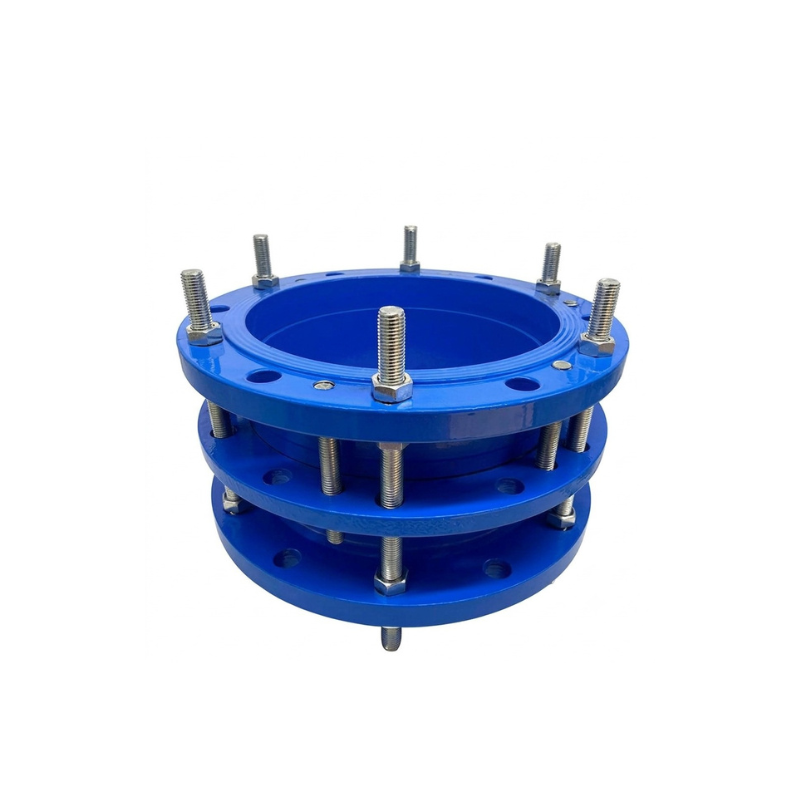
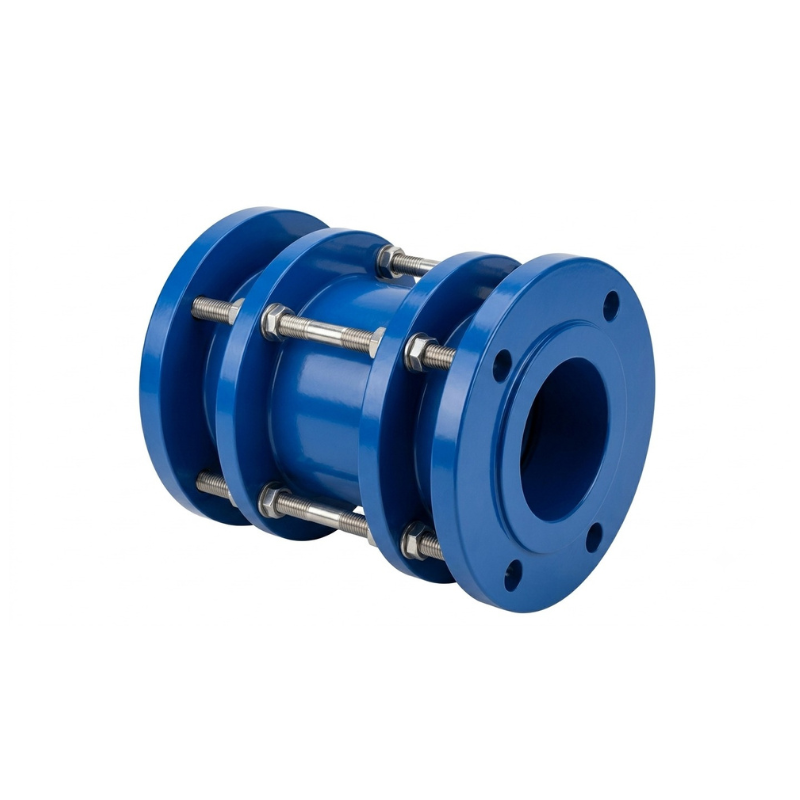
VIBRO Dismantling Joints are designed to facilitate the installation and removal of equipment, fittings, and pipe sections within a pipeline system. They provide essential longitudinal adjustment, enabling precise alignment of valves and other flanged components during assembly. Without this adjustable feature, positioning a valve accurately within a fixed pipe run is extremely challenging.
Key Specifications
By allowing on site length adjustment, dismantling units create the necessary clearance for the safe installation or removal of equipment without extensive pipe modifications. This significantly reduces maintenance time, improves site productivity, and minimizes system downtime. Suitable for a wide range of water, HVAC, industrial, and infrastructure applications, VIBRO Dismantling Joints offer a practical solution for accommodating installation tolerances, bridging fixed gaps, and facilitating future maintenance activities.
Product Details
VIBRO Dismantling Joints are designed to facilitate the installation and removal of equipment, fittings, and pipe sections within a pipeline system. They provide essential longitudinal adjustment, enabling precise alignment of valves and other flanged components during assembly. Without this adjustable feature, positioning a valve accurately within a fixed pipe run is extremely challenging. By allowing on site length adjustment, dismantling units create the necessary clearance for the safe installation or removal of equipment without extensive pipe modifications. This significantly reduces maintenance time, improves site productivity, and minimizes system downtime. Suitable for a wide range of water, HVAC, industrial, and infrastructure applications, VIBRO Dismantling Joints offer a practical solution for accommodating installation tolerances, bridging fixed gaps, and facilitating future maintenance activities.
- Valves
- Pumps
- Flow meters
- Other Flanged Equipment requiring Periodic Removal for inspection, servicing, or replacement.
Precise Length Adjustment
Provides longitudinal adjustment for accurate alignment of valves, pumps, and flanged equipment.
Easy Installation and Removal
Creates the necessary clearance for quick assembly, dismantling, and replacement of pipeline components.
Reduced Maintenance Downtime
Simplifies servicing procedures, minimizing operational interruptions and maintenance costs.
Bridges Fixed Gaps
Ideal for connecting equipment installed in fixed positions to existing pipework.
Accommodates Installation Tolerances
Compensates for dimensional variations and site installation discrepancies.
STEP 1 : Check the Vibro Dismantling Joints to ensure that no damage occurred during the transit and no parts are missing.
STEP 2 : Check the mating flanges to ensure that it matches the drilling of the Vibro Dismantling Joints. They must be parallel and aligned axially.
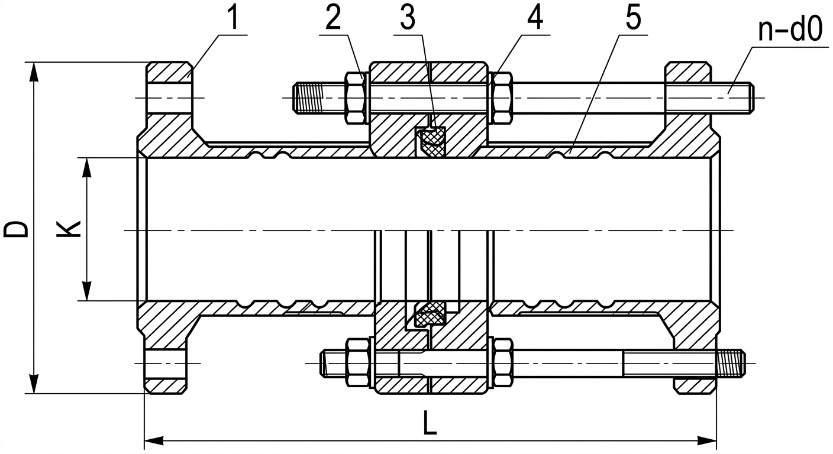
STEP 3 : Remove the tie rods from Vibro Dismantling Joints and loosen the end ring bolts to allow the spool piece to move freely within the flange coupling body.
STEP 4 : Move the Vibro Dismantling Joints into position between the mating flanges. Insert the flange gasket between the flanges faces (not provided). Using flange bolts, fasten the flanged coupling end of the Dismantling Joint to one of the mating flanges. Depending on the situation, the tie rods might need to be inserted concurrently with the flanges bolts.
STEP 5 : Attached the flange spool to the opposite mating flange in your system and fasten together with flange bolts. Make sure the spool piece is inserted at least inches inside of the flange coupling body.
STEP 6 : The pipe spool piece should be concentric with the flanged coupling after bolting the flanges. If the flanged coupling was completely disassembled make sure the beveled edge of the gasket matches the beveled end of the flanged coupling. Slide end ring into position and hand tighten the end ring bolts.
STEP 7 : Insert tie rods. (NOTE: without the tie rods in place, the fitting is NOT RESTRAINED) Each tie rod will have a total of 4 nuts when assembled. While inserting the tie rod, thread the nuts into position. The tie rods must pass through the flanges on each end of the Vibro Dismantling Joints. Make sure the tie rod lengths are equal. Tighten the nuts that secure the flanges BEFORE torquing the nuts on the end ring to complete the installation.
STEP 7 : Insert tie rods. (NOTE: without the tie rods in place, the fitting is NOT RESTRAINED) Each tie rod will have a total of 4 nuts when assembled. While inserting the tie rod, thread the nuts into position. The tie rods must pass through the flanges on each end of the Vibro Dismantling Joints. Make sure the tie rod lengths are equal. Tighten the nuts that secure the flanges BEFORE torquing the nuts on the end ring to complete the installation.
STEP 8 : Evenly tighten the bolts around the end ring by diametrically alternating opposite positions at approximately 25ft-lb increments until the recommended torque is achieved. Wait ten minutes and the torque. Recommended torque for end rings is 60-70 ft-lbs.
1.Check flanges to make sure you are using the correct Vibro Dismantling Joints size; also check the length to make sure it will fit in the space allocated.
2.Make sure no foreign materials lodge between gasket and spool.
3.Avoid loose fitting wrenches, or wrenches too short to achieve proper torque
4.Keep threads free of foreign material to allow proper tightening.
5.Take extra care to follow proper bolt tightening procedures and torque recommendations. Bolts are often not tighten enough when a torque wrench is not used.
6.Pressure test for leaks before backfilling.
7.Backfill and compact carefully around pipe and fittings.
8.When reinstalling parts with stainless steel hardware, there may be a loss in pressure holding ability due to worn or damaged threads during the original installation.
1.Bolts are not tightened to the proper torque
2.Rocks or debris between spool and gasket
3.Dirt on thread of bolts or nuts
4.Not enough pipe insertion
5.Incorrect mating flange
Related Products
Explore our full range of vibration isolation solutions
It is a long established fact that a reader will be distracted by the readable content of a page when looking at its layout.
It is a long established fact that a reader will be distracted by the readable content of a page when looking at its layout.
Ready to Solve Your Vibration & Noise Ready to Solve Your Vibration Challenges?
Contact our technical team for a free consultation, product selection assistance, and competitive
pricing for your project requirements.
Or contact us directly:
Or contact us directly: